
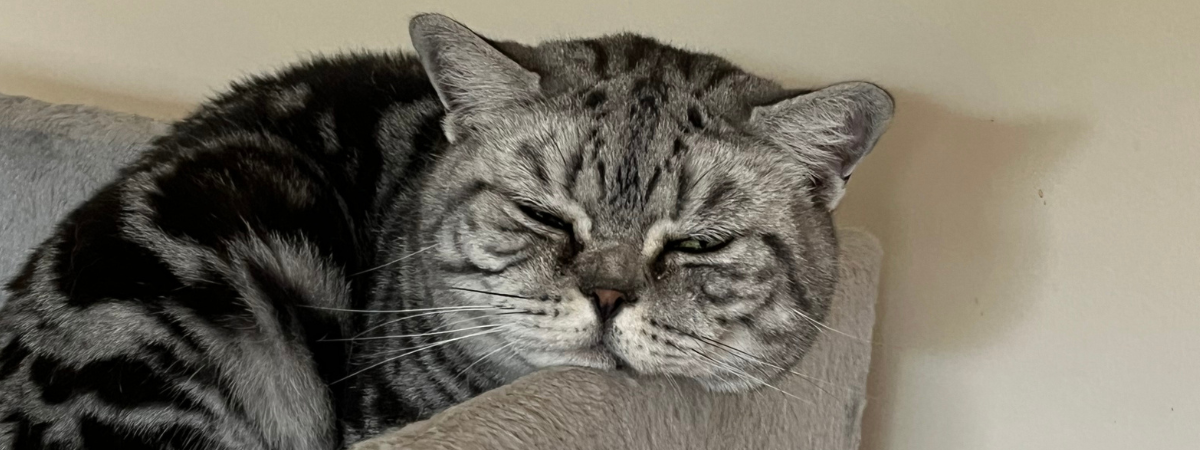
The British Shorthair tabby is one of the most varied and visually interesting expressions of the breed. Where the solid colours present a clean, even coat, the tabby varieties bring pattern — bold swirls, crisp stripes, distinct spots — layered over an already striking breed type. A well-marked British Shorthair tabby, particularly a classic tabby with a clear oyster marking on the flank, is a genuinely impressive cat.
Tabby is not a single colour — it is a family of patterns that can appear in a wide range of base colours. Understanding the difference between tabby patterns, and between the colours they come in, helps buyers know exactly what they are looking for and ask the right questions when approaching a breeder.
What Is a Tabby Pattern?
Tabby is a coat pattern produced by the agouti gene. Cats with at least one copy of the agouti allele (A_) will show tabby banding — alternating bands of pigment along each hair, creating the striped or patterned effect we associate with tabby cats. Non-agouti cats (aa) show solid colours instead.
Every cat carries a tabby pattern genetically — it is the agouti gene that either expresses or suppresses it. This is why some solid-coloured British Shorthairs, particularly kittens, show faint “ghost” tabby markings — the underlying pattern showing through before the adult coat fully develops.
The GCCF recognises four tabby patterns in British Shorthairs:
Classic tabby: The most strongly associated with the breed. Bold, swirling whorls on the flanks, a distinctive oyster or bullseye marking on the side, a butterfly marking across the shoulders, and rings on the tail. The pattern is clear-edged and well-defined in a good classic tabby.
Mackerel tabby: Narrow vertical stripes running down the sides, creating a fish-bone pattern. Spinal stripe, striped rings on the legs and tail. Less commonly seen in British Shorthairs than classic, but fully recognised.
Spotted tabby: The classic tabby pattern broken into distinct, separate spots along the flanks. Well-spotted British Shorthairs are particularly eye-catching and show well. Spots should be clearly defined and not merged or blurred.
Ticked tabby: Agouti ticking throughout the coat, with minimal striping — the bands of colour are on individual hairs rather than forming clear stripes or spots. Less commonly associated with British Shorthairs but recognised in the standard.
British Shorthair Tabby Colours
Tabby is recognised in the British Shorthair in most of the breed’s base colours, creating a wide range of combinations. The most commonly seen and searched for include:
Brown tabby: The classic combination — warm brown ground colour with dense black markings. The original tabby colour and still the most widely bred in the tabby group. Vivid copper or orange eyes are standard.
Silver tabby: A pure white or silver ground colour with dense black or dark markings. The contrast is particularly sharp and eye-catching, making the silver tabby one of the most photographed British Shorthair varieties. Green or hazel eyes are required by the breed standard — a departure from the copper eyes of most other British Shorthairs.
Blue tabby: A pale bluish-ivory ground with blue-grey markings. Softer and more subtle than brown or silver, with a quiet, cool-toned quality. Copper or orange eyes.
Red tabby: Rich orange-red ground colour with dark red markings. Ghost tabby markings are notoriously difficult to eliminate in red cats, and a truly clear-marked red tabby is genuinely hard to breed. Copper or orange eyes.
Cream tabby: Pale cream ground with buff or lighter cream markings. The dilute version of the red tabby — similarly prone to faint markings and difficult to breed to a clean standard.
Golden tabby / silver tabby: Golden tabbies combine the golden coat with tabby patterning, and silver tabbies have the classic silver ground with dark markings. Both produce green eyes and show well.
What Makes a Good British Shorthair Tabby?
In the show ring, tabby British Shorthairs are assessed first on type — the breed standard places the same emphasis on head shape, coat texture, and body conformation as for any British Shorthair. The tabby pattern is assessed separately, with judges looking for clarity, symmetry, and definition.
The key qualities in a show-standard tabby:
- Clear definition: Markings should be dense and clearly edged, not smudged or blurred
- Correct pattern for the variety: Classic tabbies should show a clear oyster/bullseye on the flank; spotted tabbies should have distinct, separate spots
- Good contrast: The ground colour and markings should show clear contrast — a washed-out or low-contrast tabby is penalised
- Symmetry: While perfect symmetry is rare, the better the symmetry between left and right sides, the better the cat presents
For a pet tabby British Shorthair, these considerations are largely irrelevant — what matters is that the cat is well-bred, healthy, and has the confident, patterned look that makes the tabby varieties so appealing.
British Shorthair Tabby Temperament
The British Shorthair tabby has the same excellent temperament as any other colour or pattern variety. Tabby marking does not affect character.
British Shorthairs are calm, adaptable, and quietly affectionate. They suit family homes, single owners, flat living, and households with other pets. They are not demanding, not highly vocal, and not prone to the restlessness or anxiety seen in more active breeds. Tabbies are no different in this regard — the pattern adds visual interest; the personality is consistent across the breed.
One thing buyers sometimes notice is that tabby British Shorthairs can be easier to photograph in interesting ways than solid-coloured cats — the pattern adds visual complexity and depth. This has made them popular on social media among cat enthusiasts, and it is reflected in the search volume for tabby varieties. But the temperament underneath the coat is the same reliable British Shorthair character throughout.
For a full overview of what to expect living with a British Shorthair, see our British Shorthair personality guide.
British Shorthair Tabby Health
Health considerations are the same as for the breed as a whole.
Hypertrophic cardiomyopathy (HCM): The most significant inherited condition. There is no DNA test for it in British Shorthairs, and a heart scan only shows how the heart looked on the day. Ask the breeder about heart problems in the kitten’s family.
Polycystic kidney disease (PKD): DNA test available; results should be clear for both parents.
Red and cream tabbies: Red and cream varieties — including red and cream tabbies — require the sex-linked orange gene, which affects which combinations are possible in a litter. Responsible breeders understand this and plan pairings accordingly. It is not a health issue, but it affects which colours and patterns can appear together.
For a full overview of inherited conditions to be aware of, see our British Shorthair health guide.
Buying a British Shorthair Tabby in the UK
British Shorthair tabbies — particularly brown tabby and silver tabby — are relatively available from established breeders compared to the rarer recessive colours. They are well-established in the show world and have been bred consistently for decades. Blue tabby, golden tabby, and spotted varieties may require a more targeted search.
What to look for:
- GCCF registration papers — listing the colour and pattern correctly
- A straight answer about heart problems on both sides of the kitten’s family
- PKD DNA test results — clear for both parents
- Kittens raised in a home environment, well socialised
- Photographs of the parents — particularly helpful with tabbies, as the quality of the pattern is heritable and worth seeing in the breeding cats
Price: From reputable breeders, GCCF registered British Shorthair tabby kittens with health-tested parents typically range from £800 to £1,500 depending on the colour variety, quality of the pattern, and the breeder’s reputation. Silver tabbies and golden tabbies may attract slightly higher prices due to the additional complexity of the inhibitor gene.
To find UK breeders who register their British Shorthairs with the GCCF, use our Find a Breeder directory.
British Shorthair Tabby FAQs
What is the most common British Shorthair tabby colour?
Brown tabby and silver tabby are the most widely bred and most commonly seen at shows and from breeders in the UK. Both have long histories in the breed and a strong showing presence.
Do British Shorthair tabbies lose their markings as they age?
No — adult tabby markings are stable. Kittens may show slightly less defined markings in their very early weeks, but by the time the adult coat comes in the pattern is clear and permanent. Ghost tabby markings seen in solid-coloured kittens are a different phenomenon and do fade — but the markings on a tabby cat are permanent.
Is a spotted tabby British Shorthair a separate variety?
The spotted tabby is a recognised pattern variety under the GCCF — it has its own show classes alongside classic and mackerel. It is not a separate breed or a different type of cat; it is a British Shorthair with a spotted rather than striped or swirled tabby pattern.
Can a tabby British Shorthair be shown?
Yes — tabby British Shorthairs compete in their own colour and pattern classes at GCCF shows. Brown tabbies, silver tabbies, and spotted tabbies in particular have a strong presence in the show ring.
Why do British Shorthair tabbies sometimes have green eyes?
Eye colour varies by the specific tabby variety. Silver tabbies and golden tabbies carry the inhibitor gene, which is associated with green or hazel eyes rather than the copper/orange standard for most British Shorthairs. Brown, blue, and red tabbies should have copper or orange eyes.
Is a British Shorthair Tabby Right for You?
If you love the British Shorthair’s solid, rounded type but want more visual interest than a solid-coloured cat provides, the tabby varieties deliver both. A well-marked classic tabby or a sharp silver tabby with green eyes is a genuinely beautiful cat — and the temperament underneath is everything the breed is known for.
Choose a colour and pattern combination you genuinely love, find a breeder who health-tests and GCCF-registers as standard, and ask to see photographs of the parents if pattern quality matters to you.
Explore the full range of British Shorthair colours and patterns, or find a tabby breeder with a GCCF prefix through our Find a Breeder directory.