
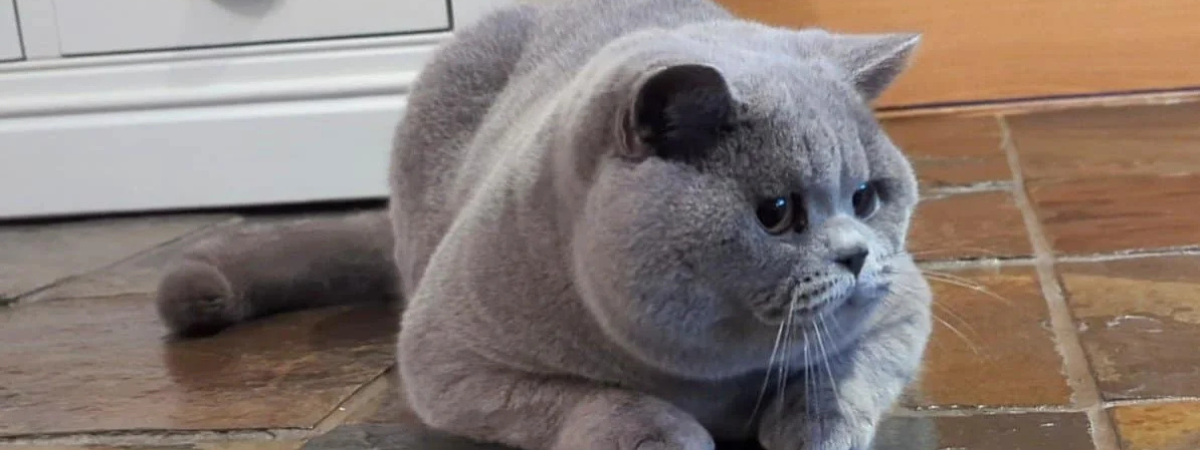
The British Blue cat is one of the most recognisable pedigree cats in the world — and one of the most searched for in the UK. That distinctive blue-grey coat, round copper eyes, and solid, teddy-bear build make it instantly appealing to first-time and experienced cat owners alike.
What many buyers do not realise is that the British Blue is not a separate breed. It is the blue-grey colour variety of the British Shorthair — the same breed, the same standard, the same temperament. The name British Blue simply refers to the colour, and it became so widely used that it took on a life of its own.
As a GCCF judge who assesses British Shorthairs at shows across the UK, I can tell you that the blue variety remains the most common, most bred, and most show-winning colour in the breed. This guide covers everything you need to know before buying or living with one.
What Is a British Blue Cat?
A British Blue is a British Shorthair cat with a blue-grey coat — the result of the dilute gene acting on black pigment. When a cat carries two copies of the dilute gene (dd), black becomes blue-grey. The result is the medium to light blue coat that defines this variety.
The GCCF breed standard for the British Blue calls for:
- An even, light to medium blue coat with no tabby markings, white hairs, or shading
- Deep orange or copper eye colour — the contrast with the blue coat is one of the breed’s most striking features
- The same rounded, compact, dense-coated type as any British Shorthair
The blue coat is the oldest and most established colour in the breed. British Shorthairs were formally developed in the late 19th century, and from the very start the blue variety dominated the breed classes. The term “British Blue” predates the more general “British Shorthair” name in common use.
British Blue Cat Appearance
The British Blue shares all the physical characteristics of the British Shorthair breed — the colour simply adds to an already distinctive look.
Body: The British Blue is a medium to large, compact cat with substantial bone. Males are noticeably larger than females. Adult males typically weigh between 5 and 8 kg; females between 3.5 and 5.5 kg. The body is broad-chested and rounded, with short, strong legs.
Head: Broad and round with full cheeks, a short nose, and a strong chin. The head shape is one of the most important features assessed in the show ring — a cat with a narrow or long head is significantly penalised.
Coat: The coat is short, dense, and plush — it has a distinctly crisp texture that stands away from the body. This is not a silky-coated breed. The density of the blue coat at its best is genuinely impressive, particularly in show-condition adults.
Eyes: Deep orange or copper, large and round. Green or pale eyes are a fault. The combination of blue coat and copper eyes is the look most associated with the breed.
British Blue Cat Temperament
The British Blue has exactly the same temperament as any other colour of British Shorthair — and it is an excellent one.
British Shorthairs are calm, adaptable, and affectionate without being demanding. They do not generally seek to be carried or held, but they will choose to be near their owners, following quietly from room to room and settling comfortably in close proximity.
They are not a vocal breed. They communicate with soft chirps and occasional meows rather than the persistent calling associated with some Oriental breeds. For owners who want a cat that is present without being intrusive, the British Shorthair temperament is hard to beat.
British Blues are reliable with children and generally tolerant of other cats and calm dogs, provided introductions are managed correctly. They suit family households as well as quieter homes and adapt well to living fully indoors.
One thing worth saying clearly: the teddy-bear appearance attracts buyers who assume the cat will enjoy being cuddled. British Shorthairs are affectionate, but on their own terms. They will come to you when they choose, accept attention when it suits them, and make it clear when they have had enough. This is not aloofness — it is independence, and it is part of what makes them such pleasant, low-maintenance companions.
British Blue Cat Health
The British Shorthair is a generally robust breed, but there are several health conditions buyers should ask about before purchasing.
Hypertrophic Cardiomyopathy (HCM): The most significant inherited condition in the breed. HCM causes thickening of the heart muscle and can lead to heart failure. Responsible breeders cardiac-screen their breeding cats annually using echocardiography and should be able to show you up-to-date results for both parents.
Polycystic Kidney Disease (PKD): Less commonly seen than in Persians, but worth checking. PKD testing is available via DNA test, and clear results for both parents should be standard.
Blood type: British Shorthairs have a higher-than-average frequency of type B blood. Kittens born to parents with incompatible blood types can suffer neonatal isoerythrolysis, so responsible breeders blood-type their cats. Ask your breeder about this.
The British Shorthair is also prone to obesity in later life — the appetite can be strong and the activity level moderate. Portion control and keeping the cat active through play becomes more important from middle age onwards.
For a full overview of conditions to be aware of, see our British Shorthair health guide.
British Blue vs Grey British Shorthair — Are They the Same?
Yes. The British Blue and the grey British Shorthair are the same cat. “British Blue” is the breed term used by GCCF, judges, and breeders. “Grey British Shorthair” is the informal name most commonly used by buyers who are unfamiliar with the breed classification.
The coat is correctly described as blue-grey rather than simply grey — a term that distinguishes it from the cooler, neutral grey seen in some other breeds. In good light, a well-coloured British Blue has a distinctly cool-toned, even blue cast rather than the flat grey of, say, a Russian Blue or a grey moggy.
If you are searching for a grey British Shorthair, you are looking for a British Blue. The breeders, the registration paperwork, and the GCCF breed standard will all use the term blue.
Buying a British Blue Cat in the UK
The British Blue is the most widely bred colour of British Shorthair in the UK, which means more breeders and more kittens available — but also a higher risk of encountering unregistered or poorly-bred cats marketed as pedigree.
What to look for in a reputable breeder:
- GCCF registration papers as standard — not optional
- HCM cardiac screening results for both parents
- PKD DNA test results for both parents
- Kittens raised in a home environment, socialised with people from birth
- A waiting list — good breeders do not have kittens available immediately at all times
- Willingness to answer questions about their breeding programme and health testing
Price: British Blue kittens from health-tested, GCCF-registered parents typically range from £800 to £1,500 in the UK. Prices below this range should prompt questions about what health testing has or has not been done. Prices well above this range are often seen for show-quality kittens or particularly sought-after bloodlines.
To find registered British Shorthair breeders in the UK, visit our Find a Breeder directory.
British Blue Cat FAQs
Are British Blue cats rare?
No. The British Blue is the most common colour variety of British Shorthair and the most widely bred in the UK. It is far more readily available than rarer recessive colours such as cinnamon, fawn, or chocolate.
Do British Blue cats stay blue as they age?
Yes, though the shade can shift slightly. Some cats lighten a little with age; others deepen. The overall blue-grey cast remains consistent throughout the cat’s life. Kittens sometimes show faint ghost tabby markings that fade as the adult coat comes in — this is normal.
Are British Blue cats good for first-time owners?
Yes. The calm, adaptable temperament and moderate grooming needs make the British Shorthair one of the best choices for first-time cat owners. The British Blue is forgiving of inexperienced handling and settles well into most home environments.
How long do British Blue cats live?
The typical British Shorthair lifespan is 12 to 20 years, with many cats reaching their mid-to-late teens in good health. Regular veterinary care, a healthy diet, and keeping the cat at a healthy weight all contribute to a longer life.
Can British Blue cats go outside?
Yes, though many are kept as indoor cats, particularly in urban areas. British Shorthairs adapt well to indoor life provided they have sufficient space, enrichment, and company. If you do allow outdoor access, a secure garden is preferable to free roaming.
Is a British Blue Cat Right for You?
If you want a calm, steady, affectionate cat that fits into family life without drama, the British Blue delivers that reliably. It is not the breed for owners who want a highly interactive, acrobatic, or attention-seeking cat. But for anyone who wants a genuinely handsome, even-tempered companion that will live contentedly alongside them for fifteen years or more, it is difficult to find a better choice.
Explore the full range of British Shorthair colours to see how the blue variety compares to the rest of the breed, or use our Find a Breeder directory to locate a reputable GCCF-registered British Blue breeder near you.